Updating Finishes in a Mid-Century Riverside Kitchen and Bath
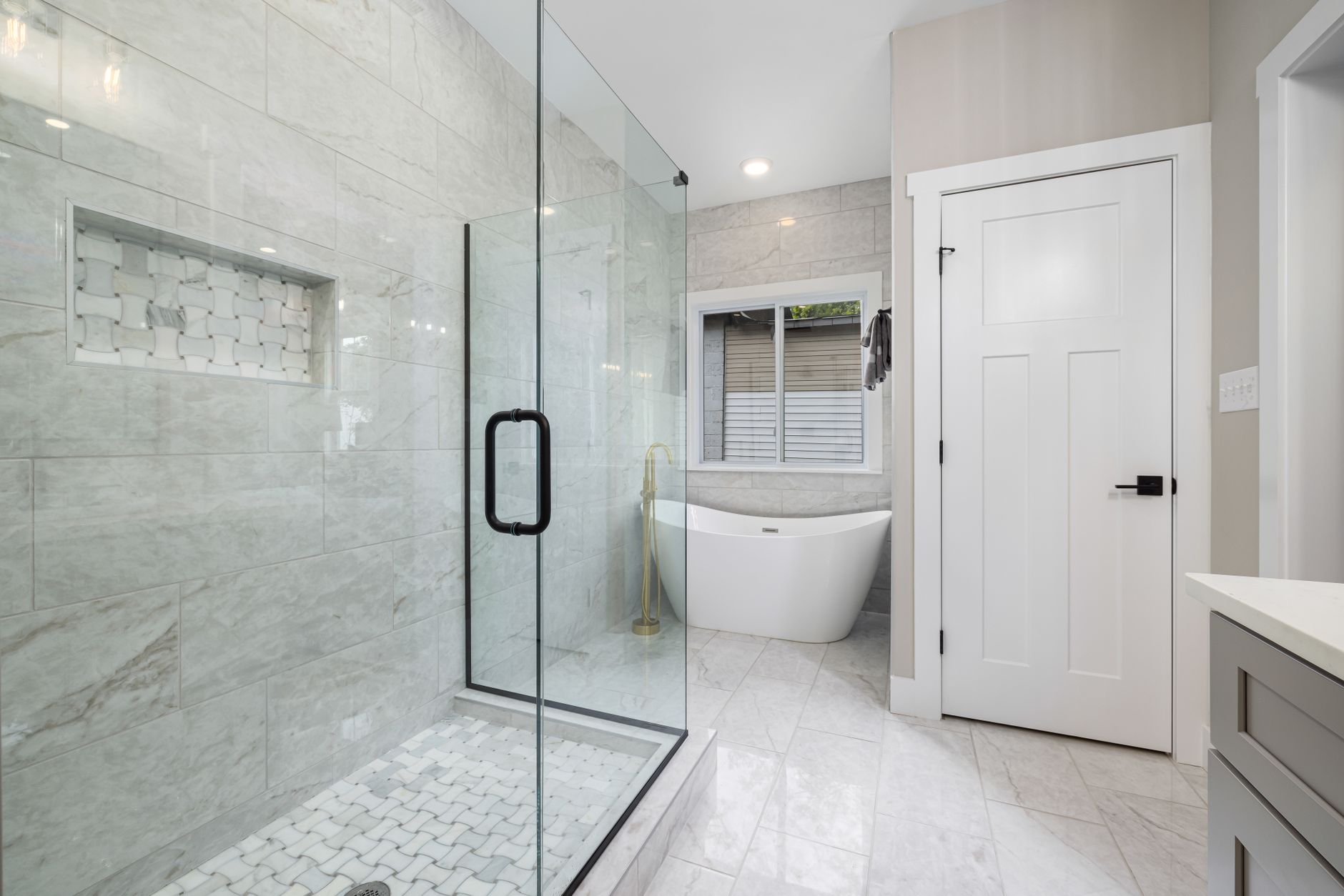
Mid-century houses make up a large share of Riverside's older neighbourhoods, from the postwar blocks near the University of California Riverside to the quieter streets east of Fairmount Park. They share a few traits: low rooflines, modest windows, slab floors, small bathrooms and kitchens that were planned around a different way of cooking. Updating the finishes in one of these houses runs into the same handful of questions every time, and the answers are mostly mechanical.
Which finishes suit a mid-century kitchen and bath?
The original design language was simple: flat panels, clean lines, a few strong materials and very little ornament. Finishes that honour that tend to look right. Flat slab cabinet doors, a plain quartz or solid surface top with a thin edge, and a field tile with a quiet colour all sit comfortably in these rooms. Heavy ogee edges, raised panel doors and busy stone patterns fight the house instead of fitting it.
Colour matters as much as style. Many of these houses came with soft greens, warm yellows, dusty blues and wood tones. A palette taken from that range, softened and updated, reads as faithful without feeling like a museum. Warm white and light oak are safe starting points, with one deeper accent in the kitchen and a related one in the bath.
How do small windows change the choice of finishes?
Small windows mean less daylight, and less daylight means finishes read darker and cooler than they did in the showroom. A mid grey tile that looked crisp under store lights can turn flat and dull in a bathroom with a single frosted window. The answer is to move one step lighter and one step warmer than instinct suggests, and to build a sample board that is judged in the actual room.
Artificial light needs the same care. A warm bulb colour makes cream and wood glow, while a cool bulb colour makes the same materials look sterile. Pick one bulb colour for both rooms and keep it constant so the finishes can be compared fairly.
Can new tile run over an old slab floor?
Usually yes, after the slab has been checked. Slabs poured in the postwar years are rarely flat, and they often carry old adhesive, paint or sealer from earlier floors. A straightedge laid across the slab shows the low spots, and a patching compound brings them level. Large format porcelain tile needs the flattest slab, because a wavy base shows up as lippage at the tile edges. Smaller tile and mosaic forgive more.
Cracks in the slab need a look too. A hairline crack that has not moved can be bridged with a membrane under the tile. A crack with a height difference across it points to a deeper issue that should be understood before any finish goes down.
What happens at the bathroom walls in an older house?
Walls in these houses are often plaster over lath or early drywall, and neither takes a modern tile installation without preparation. Behind shower tile, the wall should be cement board or similar backer board with a waterproofing membrane, because tile and grout alone do not stop water. Old tubs sit in alcoves with plaster that has soaked up decades of moisture, and that damage is discovered only once the wall is open.
Plan for the possibility that the wall behind the tub is not what it looks like. Opening it early, before finishes are ordered, keeps the schedule honest.
How should faucet and cabinet finishes be paired here?
The same two-metal rule works in any house, but mid-century rooms carry it well. Brushed nickel or satin chrome suits the clean lines. Brass in a warm, soft tone suits the wood and warm colour range. Black can work as a single accent, such as the faucet and the cabinet pulls, but too much of it turns the room heavy in a house with small windows.
Hard water in Riverside County leaves scale on any metal. Finishes with a satin surface hide the white crust better than polished ones, and a wipe after use does more than any cleaner.
Is solid surface or quartz the better fit for old bathrooms?
Both work, and the choice tends to follow the layout. Small mid-century bathrooms often have a single short vanity run. A solid surface top with an integral sink gives a clean, one piece look with no rim, which suits the era. Quartz suits the kitchen, where hot pans and knives are in daily use. Matching the colour between the two keeps the rooms related, even when the materials differ.
What colour of grout works with older tile and newer tile together?
Many mid-century houses keep some original tile, such as a bath wall in pink, mint or yellow. Where new tile meets old, a neutral grout in a mid tone bridges the two without competing. A bright white grout against old coloured tile looks stark, and a dark grout against a pale wall draws a grid. Test a dried sample against both tiles before committing.
Should original tile be kept or replaced?
That depends on its condition and on whether it still fits the plan. Sound original tile with intact grout and no loose pieces can anchor a design, and a good match for it is difficult to find. Tile that rings hollow, cracks at the edges or has failed grout behind it is better replaced. A tapping test with a coin or the back of a screwdriver finds the loose areas quickly.
Keeping a small piece, such as one wall or a border, can give the new work a connection to the house without forcing the whole room to follow it.
How do the kitchen and bath stay related in a small house?
In a small house the two rooms are often within sight of each other, so they are read together. One shared metal, one shared cabinet tone and one repeated tile family are enough. Repeating the kitchen floor colour in the bathroom, in a smaller format, ties the rooms together with almost no visual noise. Anything more than that starts to feel crowded in a house with a modest footprint.
How does the Inland Empire climate affect finish choices?
Dry summers and strong sun are the two big factors. Sun fades some stained woods and some quartz colours over time, particularly on counters beside west windows. Dry air carries fine dust that settles on kitchen backsplash grout, so mid tone grout stays clean longer than white. Winter showers still produce steam, and a bathroom fan vented to the roof, not into the attic, keeps moisture away from finishes and framing.
What should be settled before anything is ordered?
- The overall palette, written as dominant tone, supporting tone and metal.
- A sample board with tile, top, cabinet finish and grout touching each other.
- The bulb colour for both rooms, judged at morning, afternoon and night.
- The condition of the slab, the walls and any original tile that might stay.
With those four items settled, the ordering stage is mostly a matter of confirming what was already decided on the board. Finishes chosen that way suit a mid-century Riverside house for as long as the house stands.